Blake Bauer · 25 September 2026
Navigating Version Conflicts During Simultaneous Edits in Collaborative Note Platforms
Understanding Simultaneous Edit Challenges
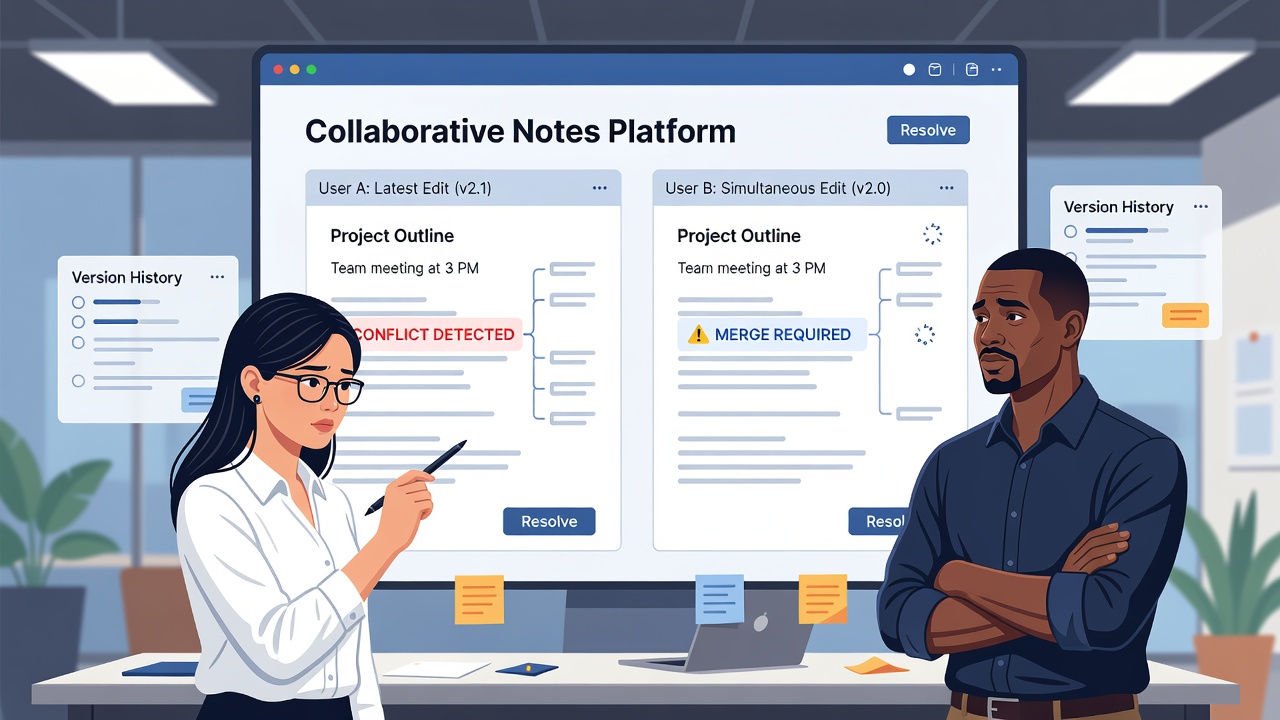
Collaborative note platforms rely on algorithms that track changes across multiple users, and version conflicts surface when two or more participants modify the same section of a document at teh same time without the system fully reconciling those alterations, according to industry reports from the National Institute of Standards and Technology. These conflicts arise because real-time synchronization protocols must balance speed with accuracy, and platforms use operational transformation or conflict-free replicated data types to manage the flow of edits while maintaining document integrity. Observers note that platforms such as Notion and Microsoft Loop implement these methods to reduce downtime during group sessions, yet the underlying data structures still require explicit resolution steps when overlapping changes occur on identical text blocks or metadata fields.
Detection Mechanisms in Current Systems
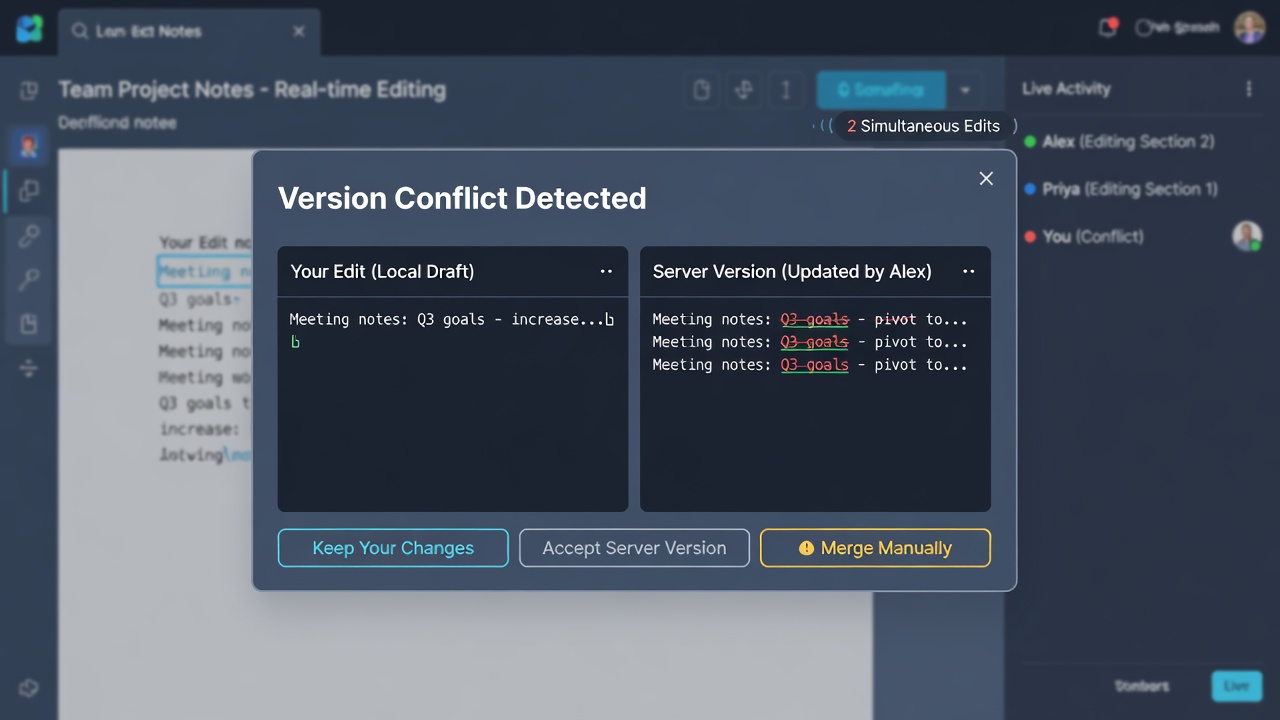
Software engineers design detection layers that compare incoming edits against a central version history, flagging discrepancies through timestamp analysis and content hashing, while researchers at the University of Waterloo have documented how these layers identify conflicts within milliseconds of submission. The process involves locking specific paragraphs or cells temporarily, then presenting users with side-by-side views of competing versions so that manual or automated merges can proceed without data loss. Platforms often surface alerts through colored highlights or inline notifications, and data from the European Commission's digital collaboration studies shows that timely detection correlates with fewer follow-up revisions across large teams working on shared research notes.
Developments scheduled for September 2026 include expanded support for AI-assisted merge suggestions in several major platforms, which will scan conflict logs and propose consolidated text based on semantic similarity scores. Those features build on existing CRDT frameworks that already allow offline users to rejoin sessions without forcing full document reloads, although integration requires careful calibration of merge rules to avoid introducing new inconsistencies.
Resolution Strategies and Platform Tools
Teams resolve conflicts through a combination of automatic merges for non-overlapping changes and user-driven decisions for contested sections, and the Australian Research Council has funded projects examining how interface design influences the speed of those decisions. One common approach involves three-way diff views that display the original state alongside both edited versions, allowing participants to accept, reject, or edit proposed combinations directly in the note interface. Platforms further support branching workflows where a conflicting edit spawns a temporary sub-document that later gets merged back into the primary file once consensus forms among contributors.
Advanced tools now include granular permission controls that limit simultaneous editing to specific user roles during high-stakes review periods, while audit trails record every merge action for compliance purposes. Those who have studied enterprise deployments observe that organizations using these controls report smoother handoffs between departments that edit the same note collections regularly. The ball remains in the platform developers' court to refine these tools as document complexity grows, particularly when notes incorporate embedded tables, images, and linked references that complicate simple text comparisons.
Best Practices for Teams and Administrators
Administrators reduce conflict frequency by establishing editing windows and clear ownership guidelines for different sections of shared notes, and case studies from Canadian university libraries illustrate how scheduled review cycles cut down on overlapping edits. Users benefit from enabling real-time cursors and presence indicators so that teammates can see exactly which parts of a note are under active modification, thereby steering clear of the same paragraphs. Regular training sessions on version history navigation also help teams recover from conflicts faster, and figures from industry surveys indicate that groups adopting these habits experience fewer instances of lost work during extended collaborative sessions.
Platform settings often allow configuration of conflict thresholds that trigger automatic notifications when edit density exceeds preset limits, giving teams time to pause and coordinate before problems compound. External integrations with project management systems further streamline the process by linking note versions to task assignments, which creates an additional layer of accountability during simultaneous work periods.
Future Directions in Conflict Management
Research continues on predictive models that anticipate likely conflict zones based on user behavior patterns, and early prototypes already demonstrate reduced resolution times when these models guide interface adjustments. As platforms scale to support larger numbers of concurrent editors, emphasis shifts toward decentralized architectures that distribute conflict resolution across edge nodes rather than central servers. Observers tracking the space expect incremental improvements in these areas through 2026, with particular attention to accessibility features that ensure all participants can engage equally in merge decisions regardless of device or connection speed.
Conclusion
Version conflicts remain an inherent aspect of collaborative note platforms that handle simultaneous edits, yet established detection methods, resolution interfaces, and team protocols provide reliable pathways to maintain document accuracy. Continued refinement of underlying algorithms alongside thoughtful administrative practices helps organizations navigate these challenges effectively across diverse use cases.