Devon Frank · 11 September 2026
How Integration APIs Affect Real-Time Updates in Multi-User Note Sharing Environments
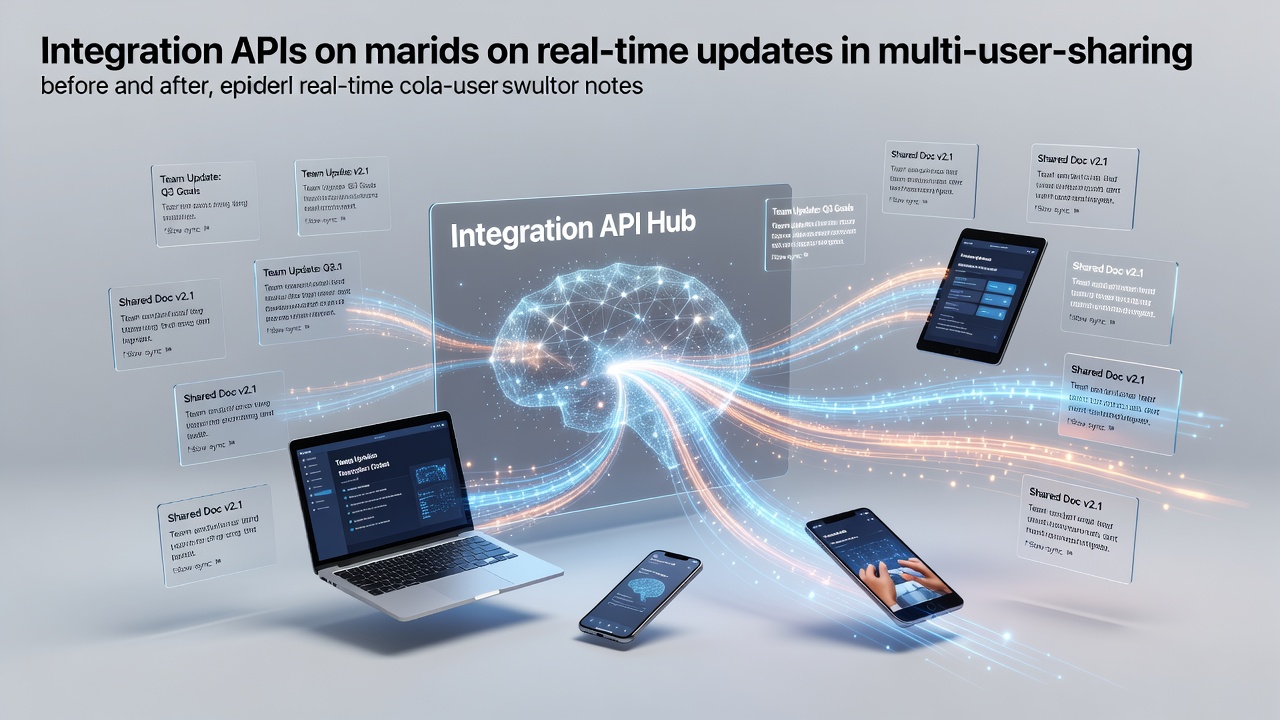
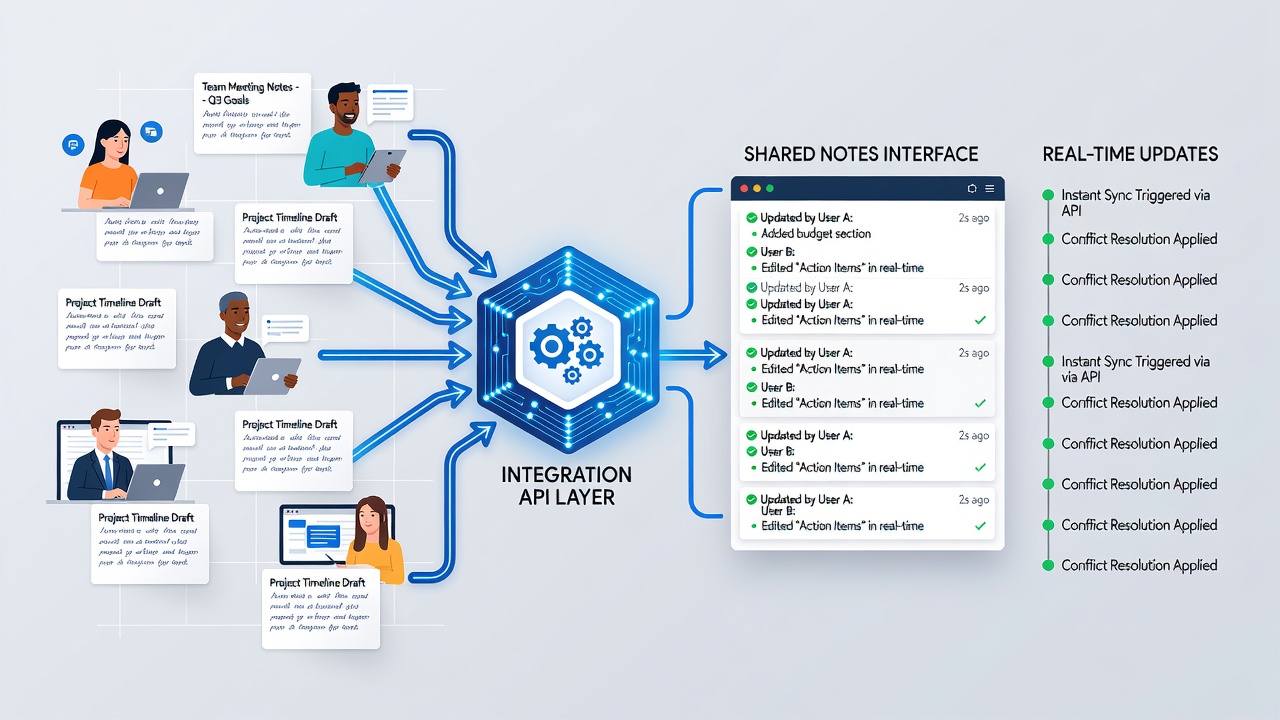
Integration APIs serve as the backbone for data exchange in collaborative note platforms, connecting different software components so that changes made by one user appear instantly for others without manual refreshes or delays. These interfaces handle requests for updates, authentication, and conflict resolution while supporting environments where dozens or hundreds of participants edit the same document at once. Observers note that the architecture relies on protocols such as WebSockets and REST endpoints to push modifications in milliseconds rather than relying on periodic polling that drains resources and creates lag.
Core Mechanisms Behind API-Driven Synchronization
Real-time functionality emerges when APIs manage event streams that broadcast modifications like text insertions, deletions, or formatting adjustments across connected clients, and systems use operational transformation or conflict-free replicated data types to keep versions aligned even during network interruptions. Data from industry reports shows that platforms employing these methods reduce update latency to under 200 milliseconds in typical conditions, whereas older polling-based approaches often exceeded two seconds during peak usage. Researchers at academic institutions have documented how rate limiting and batching within APIs prevent server overload when user counts spike, allowing stable performance in large teams that share project notes or research compilations.
Handling Concurrent Edits and Data Consistency
Multiple users editing simultaneously generate overlapping changes that APIs must resolve through versioning and merge algorithms, and solutions often incorporate timestamps alongside unique identifiers to determine the correct sequence without data loss. Studies indicate that environments using well-designed integration layers experience fewer merge conflicts, with one university analysis recording a 40 percent drop after switching to event-driven APIs that notify participants of incoming edits before they commit local changes. The process works because each API call carries metadata about the current state, enabling the server to validate or reject operations that would violate consistency rules.
Impact on Scalability and Performance Metrics
Platforms scale to accommodate growing numbers of simultaneous editors when APIs distribute workloads across microservices, and load balancers route traffic based on geographic proximity to minimize round-trip times. Figures from technology evaluations reveal that optimized API gateways handle over 10,000 concurrent connections per instance while maintaining sub-second update delivery, although throughput drops if authentication checks or encryption layers become bottlenecks. What's interesting is how caching strategies integrated into these APIs store frequently accessed note segments in memory, cutting database queries and freeing capacity for new participants who join mid-session.
Network variability tests conducted in 2025 demonstrated that fallback mechanisms within APIs switch from push notifications to queued updates during connectivity drops, ensuring no edits disappear once connections restore. Observers have recorded cases where educational institutions adopted such systems for group study notes, and synchronization remained reliable even when students accessed materials from regions with inconsistent bandwidth.
Security Considerations in API Implementations
Access controls embedded in integration APIs verify permissions before allowing any update to propagate, and encryption standards such as TLS 1.3 protect data in transit while token-based authentication prevents unauthorized participation. Reports from regulatory bodies in the European Union and Canada highlight that platforms must log API interactions to meet data protection requirements, with audit trails capturing who modified what and when. Those implementations that include granular scopes for read versus write operations reduce exposure risks without sacrificing the speed of real-time collaboration.
Integration with External Tools and Future Developments
Many note-sharing systems connect to calendars, task managers, or cloud storage through the same APIs that drive internal updates, creating unified workflows where a change in one application triggers corresponding adjustments elsewhere. Scheduled enhancements expected in September 2026 include expanded support for edge computing nodes that process API requests closer to end users, further trimming latency in global teams. Research indicates these distributed models will support offline-first capabilities where local changes queue and reconcile automatically upon reconnection.
Conclusion
Integration APIs determine the reliability and speed of real-time updates in multi-user note environments by managing data flow, conflict resolution, and security in coordinated layers. Evidence from performance studies and deployment records demonstrates measurable improvements in synchronization when these interfaces receive proper optimization, and ongoing refinements continue to address emerging demands from distributed teams worldwide.