Devon Frank · 9 October 2026
Examining the Influence of Mobile Accessibility Features on Note Creation Patterns in Remote Work Settings
Remote work environments have expanded rapidly since the early 2020s, and mobile devices now serve as primary tools for many professionals who manage daily tasks through note creation applications. Accessibility features such as voice dictation, screen reader support, adjustable text sizing, and high-contrast modes integrate directly into these applications, altering how users capture and organize information throughout their workdays. Data from multiple industry reports show that adoption rates for these features continue to rise among distributed teams across different sectors.
Core Accessibility Features in Mobile Note Applications
Mobile operating systems provide built-in options that note creation platforms incorporate at varying levels of depth. Voice-to-text functionality allows users to record thoughts without typing, while gesture-based navigation enables quick formatting changes during meetings or while commuting. Screen reader compatibility converts on-screen text into audio output, supporting those who rely on auditory feedback for extended sessions. Research indicates that these tools reduce physical input demands and shift note creation toward more frequent but shorter entries in many cases.
Shifts in Note Creation Frequency and Structure
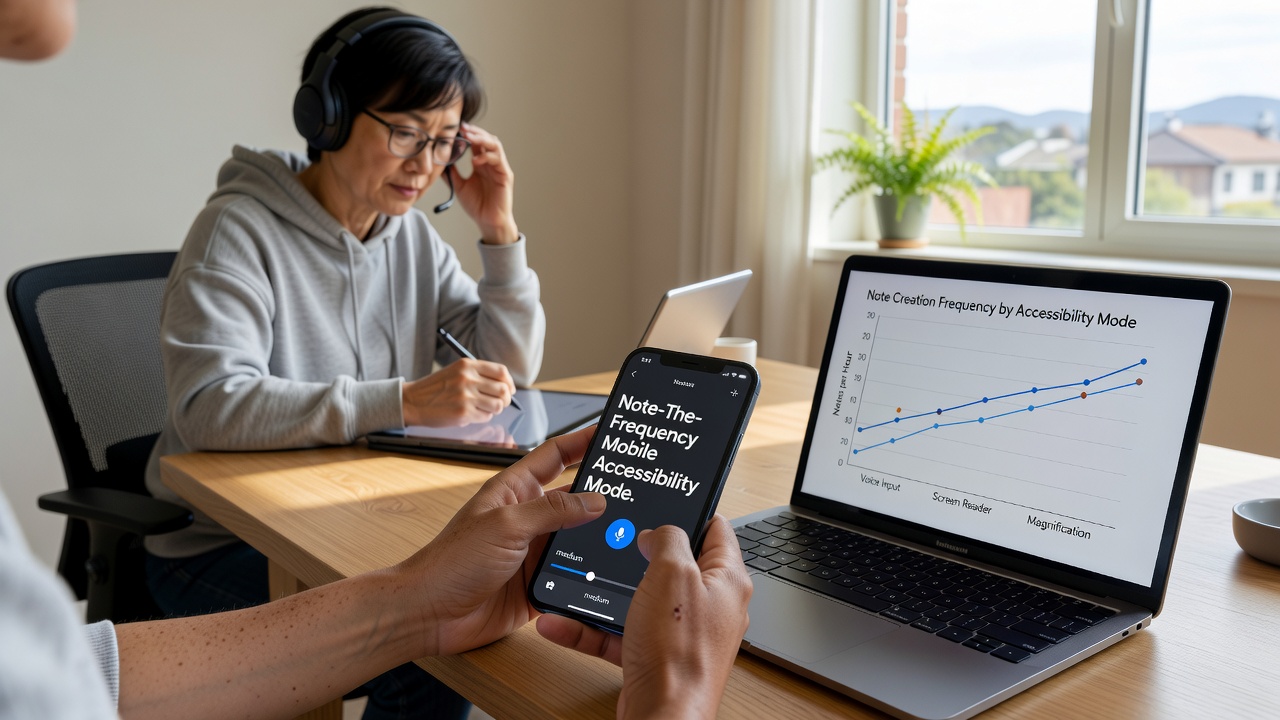
Studies tracking user behavior reveal that workers using accessibility-enhanced mobile apps tend to generate notes at higher rates during fragmented time slots rather than in dedicated blocks. Voice input encourages longer spoken phrases that later require editing for clarity, whereas keyboard shortcuts on desktops produce denser bullet lists. Observers note that remote employees often alternate between devices, starting a note on a phone during travel and completing it on a laptop later in the day. This pattern appears consistently in datasets collected from collaborative platforms serving thousands of distributed users.
Data Patterns Observed in October 2026
In October 2026, aggregated usage statistics from several enterprise note platforms highlighted a 23 percent increase in mobile-initiated notes compared with the same period the previous year. The figures reveal that accessibility toggles for simplified interfaces correlate with greater consistency in daily logging, especially among teams spread across multiple time zones. Those who enabled high-contrast modes and larger fonts reported fewer interruptions when reviewing older entries on smaller screens. Government statistics from Statistics Canada on remote workforce technology use align with these platform trends, showing similar device preferences in professional settings.
Take one research project conducted across European firms where employees documented project updates primarily through mobile voice features during October 2026. The resulting notes contained more contextual details about ongoing tasks but required additional time for transcription corrections. Another dataset from academic institutions demonstrated that students and researchers working remotely produced outlines with greater use of tagging systems when accessibility menus guided their input methods.
Device Switching and Its Effects on Content Organization
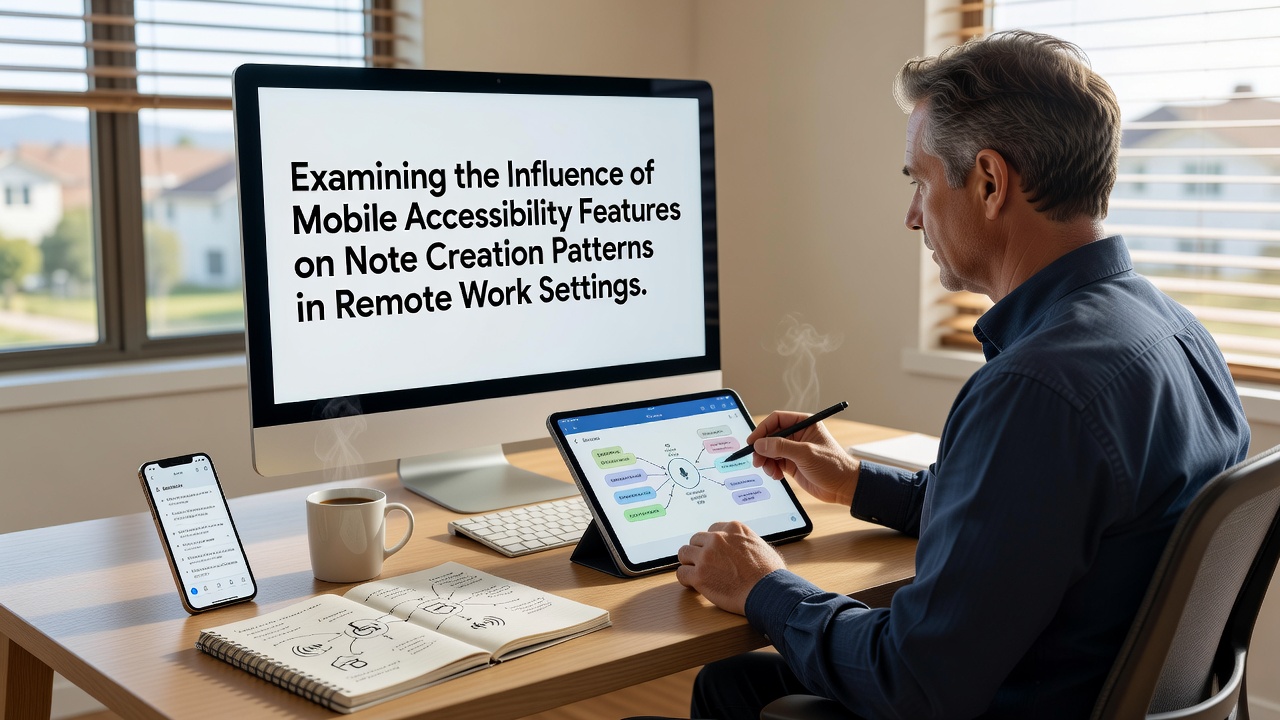
Remote workers frequently move between phones, tablets, and computers within single projects, and accessibility features help maintain continuity during these transitions. Automatic syncing combined with readable formatting preserves structure even when text size adjustments occur on one device only. Evidence suggests that users who activate persistent accessibility profiles create notes with more uniform heading hierarchies because the software enforces visual consistency across sessions. Yet patterns also show occasional fragmentation when voice-generated content lacks immediate categorization, leaving tags or folders incomplete until later review.
Industry Reports and Geographic Variations
Reports from the European Commission on digital inclusion document how accessibility mandates influence software design choices that then affect note workflows in professional environments. Separate findings from the Australian Bureau of Statistics track mobile device reliance among remote employees and note parallel increases in voice-assisted data entry. These sources indicate regional differences: European teams emphasize compliance-driven features more heavily, while Australian data points to higher overall mobile adoption rates in rural work arrangements.
One case involved a multinational team that standardized on a single note platform with strong mobile accessibility support. After implementation, meeting summaries shifted from lengthy paragraphs to modular sections that participants could expand or collapse depending on their device and preferred reading mode. Such adaptations appear repeatedly in internal company reviews shared through research networks.
Conclusion
Mobile accessibility features continue to reshape how remote professionals initiate, edit, and retrieve notes by supporting varied input methods and display preferences. Usage data collected through 2026 demonstrate measurable changes in frequency, length, and organization of entries, driven by the integration of voice tools, screen readers, and interface adjustments. Continued monitoring from regulatory bodies and academic groups will clarify long-term effects as platforms refine these capabilities further.