
Devon Frank · 23 October 2026
Decoding the Impact of Offline Caching Strategies on Content Integrity Across Distributed Workspaces
Distributed workspaces rely on offline caching to maintain productivity when network connections drop, yet these same mechanisms create measurable effects on content integrity that researchers continue to track across multiple platforms. Systems store copies of files and notes locally during disconnection periods, then reconcile changes upon reconnection, which introduces risks around version mismatches and data corruption if synchronization protocols fail to align properly.
How Offline Caching Operates in Practice
Workspaces equipped with offline capabilities cache data in local storage layers that activate automatically when connectivity weakens, allowing users to edit documents without interruption while the system logs every modification for later upload. Engineers design these caches with expiration rules and priority queues that determine which pieces of content receive immediate synchronization attention once the network returns, and data shows that larger files often face longer reconciliation windows because of bandwidth allocation patterns observed in enterprise deployments.
Studies from institutions tracking collaborative tools indicate that caching strategies differ by implementation, with some prioritizing full document snapshots while others focus on incremental deltas that reduce transfer loads but demand precise conflict detection algorithms. In October 2026 several distributed note platforms updated their caching modules to incorporate machine learning models for predicting edit patterns, which in turn affected how integrity checks process incoming changes from multiple remote locations.
Effects on Content Integrity
Content integrity suffers when cached versions diverge from the authoritative server state, particularly in environments where simultaneous edits occur across separate devices without real-time oversight. Researchers discovered that hash-based verification methods catch many discrepancies, yet they sometimes miss subtle formatting shifts or embedded metadata alterations that arise during prolonged offline sessions. Observers note that distributed teams handling sensitive project files report higher rates of reconciliation errors when cache sizes exceed certain thresholds, leading organizations to implement stricter size limits and automated purge schedules.
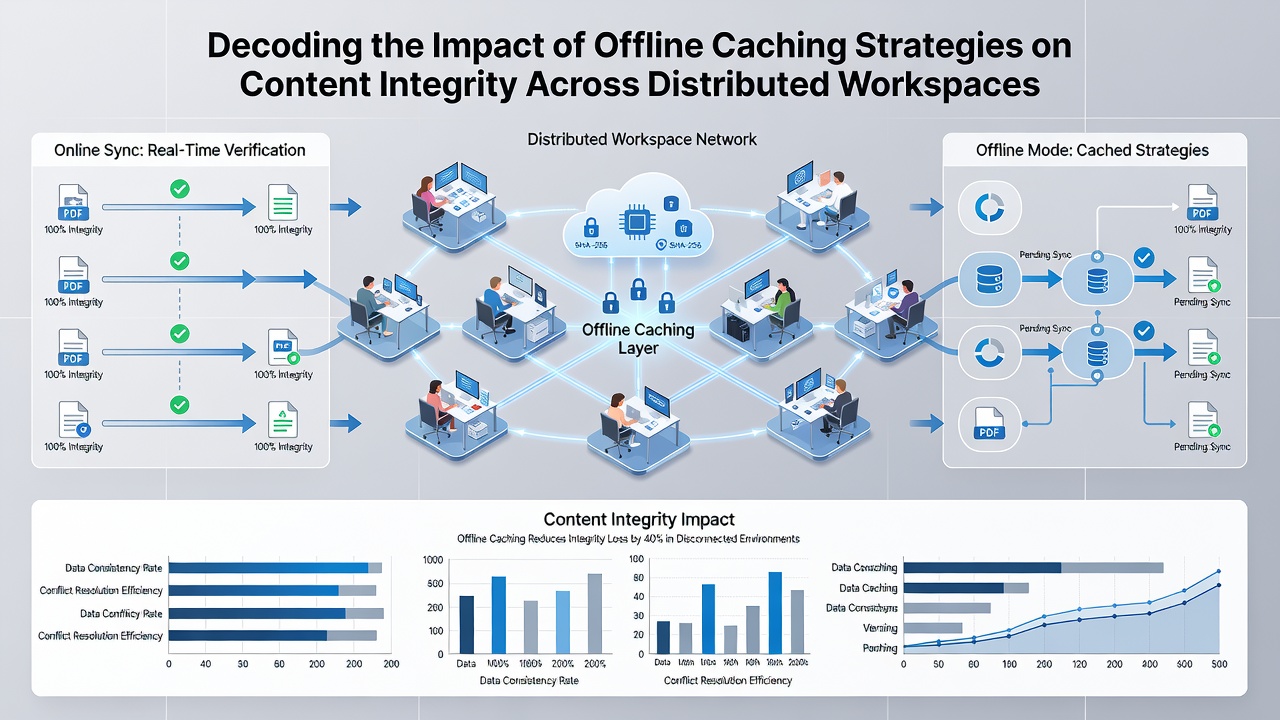
Integrity metrics collected by monitoring services reveal that conflict rates climb during peak usage hours, especially when multiple contributors work on overlapping sections of shared documents. Those who've analyzed logs from large-scale deployments point out that encryption layers added to cached data can complicate integrity verification if key rotation schedules fall out of sync with reconnection events. And while many platforms now embed checksums at the block level, the approach still requires careful tuning to avoid performance bottlenecks during bulk uploads.
Strategies That Address Integrity Risks
Teams adopt layered validation techniques that combine local checksums with server-side comparisons, allowing systems to flag mismatches before full merges take place. According to reports from the National Institute of Standards and Technology, combining timestamp vectors with content hashing reduces undetected corruption incidents across geographically dispersed workspaces. Engineers further refine these methods by introducing quorum-based approvals that require agreement from multiple cache nodes before accepting reconciled versions.
Additional approaches include differential synchronization that transmits only altered segments, which cuts down on transfer volume while preserving the original structure of documents. Data from academic studies conducted at institutions in Australia shows that workspaces implementing these differentials experience fewer integrity violations during extended offline periods compared with full-snapshot methods. Platforms also integrate audit trails that record every cache write operation, giving administrators visibility into potential tampering or accidental overwrites that occur outside network coverage.
Current Developments Observed in 2026
By October 2026 several major collaborative platforms rolled out updated caching frameworks that embed real-time integrity scoring, using signals from device sensors and network history to adjust cache behavior dynamically. These updates allow systems to lower cache retention times for high-risk content types while extending them for static reference materials, a shift that reflects patterns identified in usage analytics from thousands of active workspaces. Industry organizations tracking these changes note improved consistency scores after the updates, although adoption varies by region due to differing regulatory expectations around data handling.
European research centers have published findings on how regulatory frameworks influence caching policy design, with emphasis on maintaining verifiable chains of custody even during offline intervals. The result is a growing set of best practices that combine technical controls with procedural guidelines to keep integrity intact across borders and time zones.
Conclusion
Offline caching remains essential for continuity in distributed workspaces, yet its influence on content integrity demands ongoing attention through refined protocols and verification layers. Organizations that monitor synchronization outcomes and adjust caching parameters accordingly maintain higher consistency levels, while those who overlook these factors encounter recurring reconciliation challenges. Continued examination of performance data from platforms operating in 2026 will likely shape the next generation of strategies that balance accessibility with reliable content preservation.